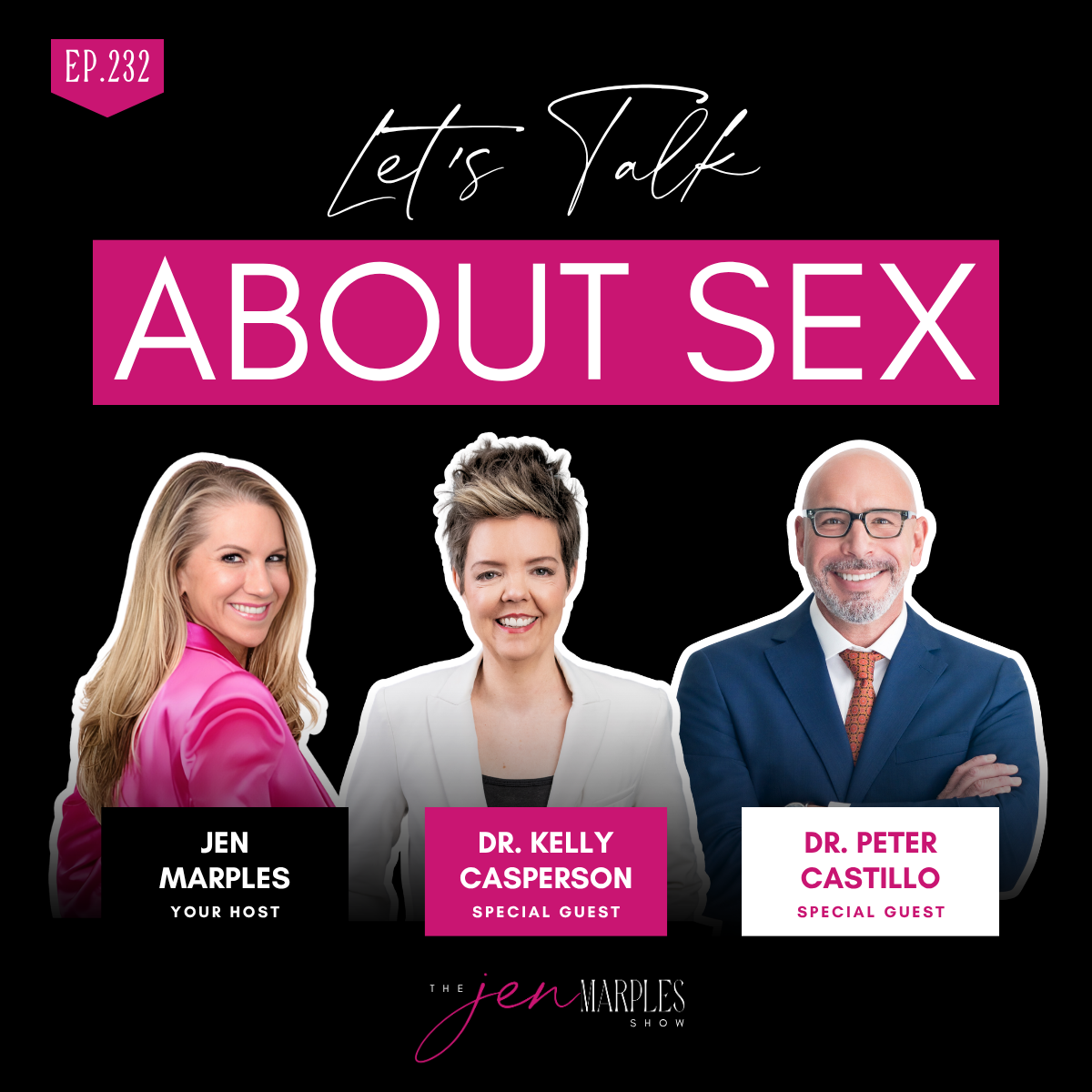


This conversation with Dr. Kelly Casperson and Dr. Peter Castillo is a masterclass in reclaiming your sexual health, and it is going to change the way you view midlife. We are having an honest, no-shame talk about sex, why everyone deserves to have good sex and how to move past the pain or silence that often accompanies menopause.
Dr. Casperson, a urologist, and Dr. Castillo, a urogynecologist, break down the physiological “cliff” women often feel they’ve fallen off. They explain how hormonal shifts—specifically the decline of testosterone and estrogen—start much earlier than most of us realize, often beginning in our late 30s or early 40s. From the “Spice Girls” of hormones to the power of vaginal estrogen as preventative care, this episode provides the concrete facts you need to advocate for your own well-being.
We also explore modern solutions beyond the pharmacy, including laser treatments and red light therapy that restore vaginal tissue health. If you’ve ever been told your symptoms are just a normal part of aging, this episode is your permission to seek a second opinion and prioritize your pleasure.
You Need to Listen If You Want To:
- Understand the physiological changes that impact libido and comfort during perimenopause and menopause.
- Demystify the roles of estrogen, progesterone, and testosterone in brain health, bone density, and sexual response.
- Learn why having a period isn’t a “permission slip” for hormone therapy and why early intervention is key for longevity.
- Discover non-hormonal options like fractional lasers and photobiomodulation for treating dryness and pain.
- Gain practical scripts for opening an honest, low-pressure dialogue about sex with your partner.
You’re Not Too F***ing Old! for great sex!
Learn more about Jen Marples at https://www.jenmarples.com
Want to work with Jen? Book a complimentary 20-minute call HERE.
Follow Jen @jenmarples on Instagram, LinkedIn, TikTok and YouTube
Subscribe to Jen’s Newsletter
Unedited AI Transcript Here
CONNECT WITH THE GUESTS:
Dr. Kelly Casperson:
- Website: kellycaspersonmd.com
- Instagram: @KellyCaspersonMD
- Books: You Are Not Broken & The Menopause Moment
- Podcast: You Are Not Broken
Dr. Peter Castillo:
- Website: swanmd.com
- Instagram: @SwanMed
Resources mentioned:
- 🔗 ISSWSH.org — find a sexual health provider near you
- 🔗 menopause.org — Menopause Society provider directory
- 📱 Telehealth options for testosterone: Joi (joi.com) & Midi (midi.com)
Reclaiming Your Spark: A Guide to Great Sex and Health in Midlife
You deserve to have a great sex life. Many people think that once you hit a certain age, things just stop working or the spark naturally fades away. You might feel like everything has fallen off a cliff. But here is the big secret: your body is not broken. You are simply going through a change in your body chemistry that started much earlier than you think. This article, inspired by an interview with two leading pelvic health experts, will show you how to take charge of your health and feel like yourself again.
Is this for you? If you are in your 30s, 40s, or 50s and notice that your mood, sleep, or energy levels feel off, this is for you. If sex has become painful or just feels like a chore, you are in the right place. You do not need to wait until things get bad enough to seek help.
Step 1: Learn the Truth About Your Body’s Signals
Many people believe that their bodies only change when they reach a specific milestone, like the end of their monthly cycle. This is a mistake. Your body starts changing its hormone levels—the chemicals that run your engine—as early as your 30s. When these levels drop, you might feel tired, grumpy, or lose interest in things you used to love. Most doctors focus only on the end goal, but the real journey starts years before. Dr. Casperson explains that the amount of hormones that your body needs to make a period is actually a very small amount and hormone changes start happening well before periods end. By understanding that these signals are normal and manageable, you can stop feeling like something is wrong with you and start looking for the right support.
The takeaway: Knowledge is your first line of defense against feeling old.
- Hormone levels often start to drop in your late 30s.
- You do not have to wait for your cycle to stop to get help.
- Low energy and mood swings are often tied to these chemical shifts.
- Education helps you talk to your doctor with confidence.
Step 2: Meet the Spice Girls of Your Internal System
Think of your hormones like a famous pop group—each one has a different personality, but they work best as a team. One helps with sleep and feeling calm. Another keeps your bones strong and stops hot flashes. The third one, which many people forget about, gives you drive and helps your brain stay sharp. Dr. Casperson notes that estrogen, progesterone, testosterone are all on what we call the cholesterol pathway and are very similar. A common mistake is only focusing on one member of the group. When you balance all three, you don’t just fix one problem; you improve your whole life, from your sleep to your focus at work.
The takeaway: Balance is the key to feeling like a whole person again.
- Estrogen helps with hot flashes and keeps skin healthy.
- Progesterone is your chill hormone that helps you sleep.
- Testosterone isn’t just for men; it helps your brain and your drive.
- These chemicals protect your brain and bones for the long haul.
Step 3: Start with Low and Slow Solutions
When you finally decide to get help, you might want a magic pill to fix everything overnight. However, your body hates big shocks. A common error is starting with a dose that is way too high, which can make you feel overwhelmed. Dr. Casperson advises a better way: start low, go slow, you can always move up. She compares it to a haircut: don’t take off too much at once, you can’t put it back. Taking it slow ensures you stay comfortable and find the sweet spot that works for you.
The takeaway: Patience leads to the best results when fixing your internal balance.
- Big shocks to your system can cause bad side effects.
- Start with small doses and see how you feel first.
- Blood tests are helpful, but how you feel matters most.
- Everyone is different, so your perfect dose is unique to you.
Step 4: Protect Your Local Health Daily
We often think about our health as one big picture, but sometimes we need to focus on specific areas. Just like you brush your teeth to prevent cavities, you need to care for your intimate tissues to prevent pain and infections. Many people think pain during sex is just a part of getting older. That is a myth! Dr. Castillo points out that there are treatments like energy-based therapies that help restoring the normal function of skin in the vagina. If you skip this daily maintenance, you might face bigger problems later, like frequent bathroom trips or constant discomfort.
The takeaway: Daily hygiene for your intimate health prevents future pain.
- Intimate skin can become thin and dry without proper care.
- Using local treatments is safe and very effective.
- This care helps prevent bathroom issues and infections.
- Treat this like a normal part of your health routine.
Step 5: Open the Lines of Communication
The biggest barrier to a great sex life isn’t your body—it’s silence. We often feel too embarrassed to talk about sex, even with the person we love most. We wait until there is a problem to speak up, which makes the conversation feel heavy and scary. Dr. Casperson reminds us that you don’t die talking about sex. Instead, try talking about it when things are going well. Dr. Castillo suggests a team approach: just like in pregnancy… they’re in it together and they have all the tolerance and patients in the world for their partner. When you share what you are going through, you can solve the problem as a team.
The takeaway: Honest talk removes the shame and brings you closer together.
- Shame thrives in silence, so start talking.
- Tell your partner, it’s not you, it is me. There’s something going on that I don’t understand.
- Talk about sex when things are good to make it easier.
- You deserve a partner who supports your health journey.
Conclusion
You are not too old, and you are certainly not broken. Your sexual health is a window into your overall well-being and how long you will live a vibrant life. By understanding your hormones, starting treatments slowly, and talking openly with your partner and doctor, you can reclaim your spark.
Recap of your steps to success:
- Educate yourself on the early signs of body changes.
- Learn the roles of all your key hormones.
- Start slow with any new treatments to avoid shocks.
- Prioritize local care for your intimate health every day.
- Talk it out with your partner and find a doctor who listens.